
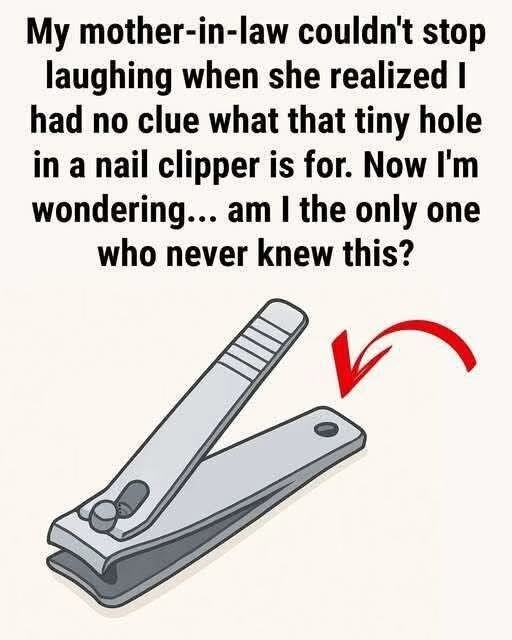

Why Nail Clippers Have a Small Hole
The Quiet Genius Behind an Everyday Tool
Introduction
Most of us reach for a nail clipper without giving it a second thought. It sits quietly in a
bathroom drawer, a travel kit, or a bedside table, ready when needed. Yet hidden within its
familiar metal shape is a small detail many people notice but rarely question—the tiny round
hole near the lever.
Far from decorative, this feature reflects thoughtful design that has endured for generations.
Especially for older adults, everyday tools like nail clippers tell quiet stories of an era
when items were built to last, designed with purpose rather than flash.
Understanding this small hole reveals how simple design choices can improve daily routines,
organization, and comfort.
Why This Design Detail Matters
- Improves portability and organization
- Enhances grip and usability
- Helps prevent loss and misplacement
- Reflects long-lasting, practical design
- Connects modern tools to historical craftsmanship
Key Features (Ingredients of the Design)
- Durable metal construction
- Lever mechanism for controlled pressure
- Precision cutting edges
- Small circular hole near the lever
- Compact, travel-friendly size
How the Hole Is Used (Instructions)
1. Improving Portability
The hole allows the nail clipper to be attached to a keychain, string, hook, or grooming kit.
This keeps it visible, accessible, and far less likely to be lost.
2. Enhancing Grip and Control
Some users thread a small loop through the hole to improve grip.
Others use it as a leverage point, making nail trimming easier on hands with reduced strength
or flexibility.
3. Keeping Tools Organized
The hole makes it easy to keep fingernail and toenail clippers paired together using a small ring.
This supports consistency and reduces confusion in shared households.
Methods of Use
- Keychain Method: Attach to keys for everyday access
- Bathroom Hook: Hang inside a cabinet or drawer
- Travel Kit: Secure to a toiletry pouch
- Grip Loop: Add string or elastic for easier handling
Historical Background
The small hole in nail clippers dates back to the late 1800s, when personal grooming tools
became more widely available. At the time, nail clippers were considered refined accessories,
often carried like pocket watches.
The hole allowed them to be attached to chains or decorative holders, ensuring they were always
close at hand. These early tools were built with durability and daily use in mind, and every
feature served a purpose.
Benefits of This Thoughtful Design
- Reduces frustration from misplaced tools
- Supports aging hands and changing grip strength
- Encourages organization and simplicity
- Extends usability across decades of life
- Promotes mindful, intentional living
Design Philosophy & Formation
The continued presence of the hole reflects a design philosophy focused on usefulness over trends.
Features that serve no purpose are usually removed over time. This one remains because it works.
Manufacturers recognize that people value tools that feel familiar, reliable, and adaptable.
The hole represents respect for real-life use and long-term value.
Why the Design Endures
Despite modern upgrades—built-in files, nail catchers, and multi-purpose features—the hole has
never disappeared. Its survival proves that simple solutions often outperform complex ones.
It reminds us that the best designs solve problems quietly, without demanding attention.
A Lesson in Everyday Awareness
In a fast-paced, digital world, small physical details help ground us.
Noticing the hole in a nail clipper invites mindfulness and appreciation for objects shaped
by experience, care, and history.
Conclusion
The next time you trim your nails, take a moment to notice that small round hole.
It connects past and present, supports comfort and organization, and proves that thoughtful
design can endure for generations.
In the end, it is not just a hole—it is a reminder that even the simplest tools deserve our respect.
Loved By
Older adults, minimalists, practical thinkers, designers, and anyone who values tools that
work quietly, reliably, and thoughtfully—day after day.